

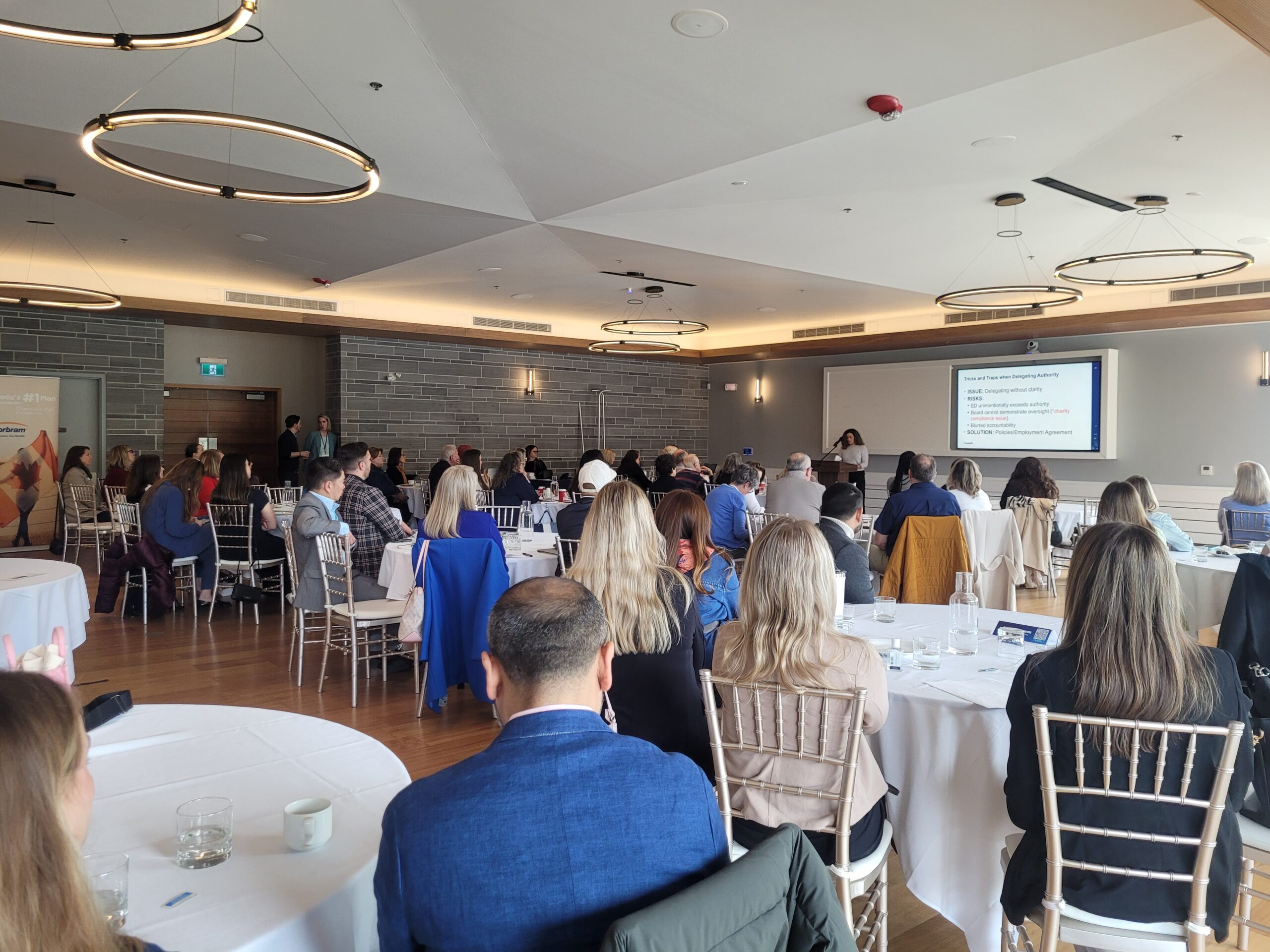
During National Volunteer Week, nonprofit and charity leaders came together for a candid and practical conversation about what it takes to build stronger, more sustainable organizations.
Hosted by the Central York Chamber of Commerce in partnership with Presenting Partner Magna International, with support from AMLB and The Printing House, the event brought together speakers with deep experience in leadership, finance, governance, storytelling, and fundraising. For those who were not able to attend, the day offered an honest look at the pressures facing the sector — and the practical steps organizations can take to move forward with clarity and confidence.
The tone was set from the very beginning. Opening keynote speaker Mike Prosserman, Founder of Unity Charity and Chair of Epic Leadership, challenged the room to treat leadership wellbeing as a sector-wide issue, not an individual weakness. He acknowledged the reality many nonprofit leaders are facing: growing community needs, tighter funding, short cash runways, complex reporting requirements, and exhausted teams.
But the message was not only about pressure. It was also about action.
“The nonprofit sector is not about to be in a crisis. It currently is in one.”
Mike spoke openly about burnout, succession, and the loneliness that can come with executive leadership. His central message was that supported leaders build stronger organizations. Leaders need trusted, confidential spaces where they can be heard, challenged, and supported by peers who understand the realities of the work.
From there, Moez Bawania, Founder of AMLB, shifted the focus to financial pitfalls that can quietly undermine charities and nonprofits. His session moved beyond broad financial literacy and into practical reminders every organization should revisit: know what level of audit, review, or compilation your organization requires; understand how restricted funds are being tracked; claim eligible HST and Public Service Body rebates; keep CRA information current; build operating reserves; and invest in systems that save staff time.
“Financial literacy is something that you often learn the hard way when things are not going well.”
Moez also reinforced the importance of asking funders for flexibility up front. Clear conversations about reporting requirements, restricted funding, and administrative burden can help organizations protect capacity and focus more energy on mission delivery.
Natasha Smith, Partner, Charity and Not-for-Profit at Cassels Brock & Blackwell LLP, then connected governance to long-term sustainability. Her session highlighted that many disputes are avoidable when organizations clarify roles, authority, board responsibilities, and expectations before problems arise.
“These disagreements are largely avoidable, and they threaten sustainability.”
Governance documents such as bylaws, board terms of reference, codes of conduct, conflict of interest policies, delegation of authority policies, and board evaluation processes are not bureaucracy for its own sake. Done well, they protect mission, trust, staff, and community impact. Natasha reminded attendees that strong governance is not just about compliance — it is about creating the conditions for organizations to adapt, grow, and remain focused on their purpose.
After brunch, Janet Tadena, Senior Manager of Development at Visions of Science, offered a powerful case study in how storytelling and clarity can help nonprofits stand out in a crowded landscape. Visions of Science has grown over more than a decade from one program and a $30,000 budget into a multi-program organization with a $4 million operating budget and a team of 50.
Her advice was clear: define what makes your organization unique, tell strong and consistent stories, show impact through your website and social channels, and build relationships intentionally. In a sector where many organizations are competing for attention, trust, and support, clear storytelling is not optional — it is essential.
“Fundraising is not transactional. It is emotional.”
The final speaker, Neil Hannam, Founder of VFormation, brought a donor-strategy lens to the day. He reminded attendees that donors are often “concerned non-experts” who want to do meaningful work through organizations they trust. For smaller charities competing with larger institutions, he encouraged a more strategic use of donor data, surveys, AI-supported research, digital advertising, and audience targeting — while keeping empathy, trust, and responsible data practices at the centre.
“Donors want to be the hero of the story.”
Across the day, one theme connected every session: sustainability is built before the crisis.
It is built when leaders make time to care for themselves and each other. It is built when boards do the work of clear governance. It is built when financial systems are strong enough to guide decisions. It is built when funders are asked for flexibility. And it is built when organizations tell stories that help donors understand the human impact of their support.
The day’s message could be summed up as a series of important investments: invest in yourself as a leader, invest in tools and systems, invest in policies that reduce risk, invest in clear storytelling and relationships, and invest in understanding the data and motivations behind donors.
Together, those investments give nonprofits the edge they need to keep serving their communities with clarity, confidence, and care.